
Helping You Support Young Children’s Communication
Practical training, speaking, and resources for early childhood educators and families—helping you understand communication development from birth to age five and support it in everyday moments.

Explore the Books
Practical Communication Support from Birth to Age Five
Find guidance for your child’s stage—from early sounds and gestures to toddler words and preschool conversations—with everyday ways to support communication.
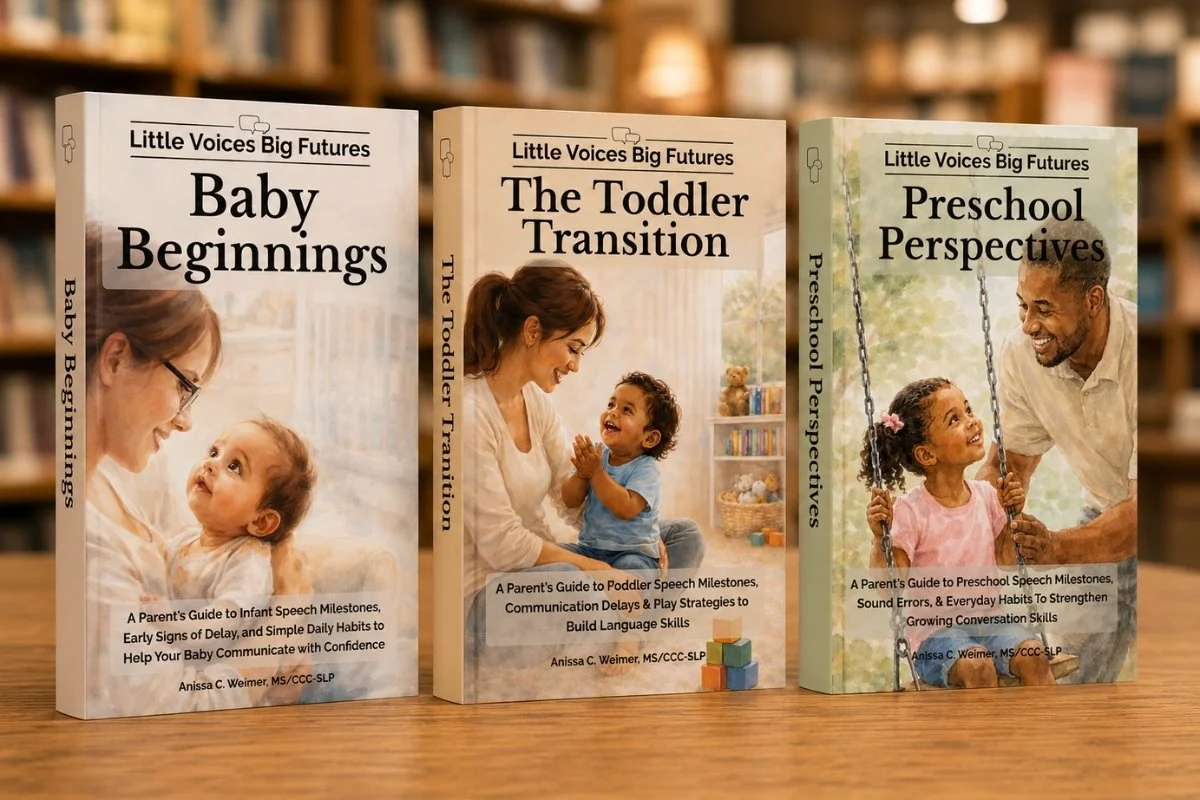
Baby Beginnings | Birth–18 Months
Understand early communication, recognize possible concerns, and support your baby through everyday interactions.
The Toddler Transition | 18 Months–3 Years
Support growing words and early sentences with practical ideas for play and daily routines.
Preschool Perspectives | Ages 3–5
Help your preschooler build conversation, storytelling, and communication skills for everyday life.

❋
Free Birth–5 Communication Guide
Wondering what communication development looks like from birth to age 5? Get this free, easy-to-use guide with milestones to watch for and simple ways to support communication along the way.
Featured & Contributions
Little Voices Big Futures beyond the books
I’m honored to contribute to conversations that help caregivers and professionals better understand and support young children’s communication. Explore guest articles, interviews, and other places where Little Voices Big Futures is being shared.
Guest article for Pediatric OT Tips
Toddlers communicate in far more ways than words alone. This article explores how gestures, sounds, actions, and everyday interactions can give us important clues about what a young child is trying to tell us.
What Toddlers May Be Communicating

Meet the Speech-Language Pathologist Behind Little Voices Big Futures
I’m a speech-language pathologist, former elementary teacher, author, and founder of Little Voices Big Futures. With more than 25 years in education and speech-language pathology, I help families and early childhood educators understand and support young children’s communication.
My work is personal, too. When my own daughter experienced communication delays, I knew what it felt like to leave an appointment concerned and unsure what to do next. That experience still shapes how I support the adults in a child’s life.
Through practical training, speaking, books, and resources, I make communication development easier to understand and support in everyday moments. You shouldn’t need a professional degree to know how to help a child communicate.
Anissa C. Weimer, MS, CCC-SLP